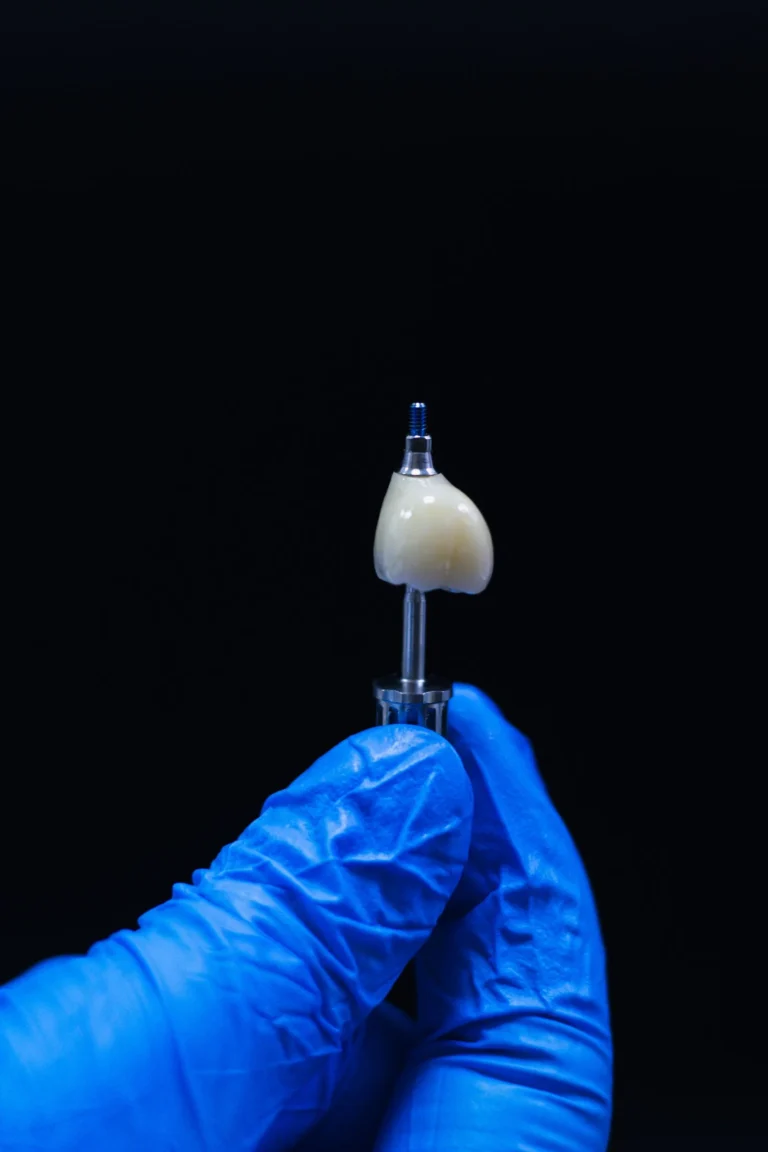
You’ve poured thousands into the treatment, the crown looks spotless, and there you are at the bathroom mirror trying to work out how to clean around dental implants without ruining the gum seal. Truth is, implants ask for more careful daily care than natural teeth, not less. Decay isn’t the issue, but the surrounding gum and bone can flare up with inflammation, and that’s behind most late-stage implant failures in the UK.
Here’s what specialists actually recommend when it comes to how to clean around dental implants, why it matters, and how to spot trouble early.
Don't Delay Your Treatment
Let's create your personalised treatment plan right away with a complimentary consultation with our specialist dentists.
Table of Contents
Why do implants need different cleaning to natural teeth?
A natural tooth sits in the jaw with a thin ligament that gives it a small blood supply and built-in immune defence at the gum line. An implant doesn’t have any of that. The titanium post fuses straight to bone, while the gum just wraps around the abutment in a tight cuff. And that cuff? It’s more vulnerable to bacteria than a natural gum margin.
Leave plaque sitting at that junction for a few weeks and you’ll end up with peri-implant mucositis, which is basically reversible gum inflammation. Ignore it for longer and things escalate to peri-implantitis, the stage where bone actually begins dissolving around the implant. Research puts peri-implantitis at somewhere around 10-20% of implants across a 10-year window, with poor home care being the single biggest risk factor.
What does a daily routine look like?
Two minutes, twice a day, and the right kit. Here’s where most UK patients go wrong: they treat implants like natural teeth and skip the awkward bits underneath the crown and along the gum line, which is exactly where trouble starts. So what does a sensible routine for cleaning around dental implants actually look like? Roughly this:
- Soft-bristled or electric toothbrush, 2 minutes, with gentle pressure
- Low-abrasive toothpaste works best here, so steer clear of charcoal formulas and the heavy-duty whitening pastes when you’re cleaning around implant crowns.
- Interdental brushes sized to fit between the implant and the next tooth
- A water flosser, used once daily, works wonders around bridges and All-on-4 restorations
- Implant-safe floss or floss threader for single crowns
You’re not scrubbing harder. What you’re doing is cleaning smarter, right at the gum margin where the cuff meets the abutment.
Should you use a manual or electric toothbrush?
Both can get the job done. That said, electric options, whether oscillating or sonic, usually clear more plaque around implant abutments since they aren’t depending on how good your technique is. Angle the head roughly 45 degrees toward the gum and just let the brush do its thing. Steer clear of hard bristles and heavy scrubbing; they’ll scratch that polished abutment surface, and a scratched surface grabs more plaque, which is exactly the opposite of what you’re after.
Don't Delay Your Treatment
Let's create your personalised treatment plan right away with a complimentary consultation with our specialist dentists.
Are interdental brushes or floss better?
Interdental brushes (TePe, Curaprox and similar) usually win when you’re learning how to clean around dental implants. The crown of an implant tends to leave a small ledge near the gumline, and a slim brush sweeps that gap far better than floss does. Have your hygienist size you up. Go too big and you’ll traumatise the gum, too small and the plaque just sits there.
When you’re working with a single front implant and space is at a premium, unwaxed floss or PTFE floss does the trick. Wrap it around the abutment and use a shoeshine motion, don’t snap it down between the teeth.
Do water flossers actually help?
Absolutely, especially with full-arch restorations such as All-on-4 or full mouth implants, since food particles and bacteria tend to lodge under the bridge. Set a water flosser to medium and it’ll wash out debris from gaps your brush simply can’t get into. Think of it as a partner to brushing, not a substitute. Hold the tip perpendicular to the gum line and move it slowly along the bridge for roughly a minute.
How often should you see a hygienist?
For someone with an implant, the recall interval drops to every 4-6 months, whereas natural teeth usually need a check every 6-12 months. The hygienist will reach for plastic or titanium-tipped tools, picked specifically because they won’t scratch the implant surface. Steel scalers, the kind used on real teeth, can chew up the abutment, so if you’re seeing a new hygienist, mention your implants before they pick up an instrument.
What warning signs should you act on?
Spotting peri-implant trouble early can mean the gap between a routine cleaning and ending up in surgery. Give us a call if any of these show up:
Don't Delay Your Treatment
Let's create your personalised treatment plan right away with a complimentary consultation with our specialist dentists.
- Bleeding when you brush or floss around the implant
- Tenderness, swelling or redness at the gum margin
- A bad taste or smell that doesn’t shift after brushing
- A loose feeling in the crown or bridge
- Visible pus or gum recession exposing metal
On their own, none of these spell emergency, but each one tells you the gum cuff is starting to fail and a professional needs to take a look.
Does aftercare differ for All-on-4 or zygomatic cases?
Yes. With full-arch work like zygomatic implants, you’ve got a longer bridge resting just above the gumline, and there’s a narrow cleaning space tucked underneath. Super-floss, interdental brushes, a water flosser, none of these are optional anymore, and during that first year most people end up seeing a hygienist every 3-4 months. Not sure if what you’re doing at home is actually doing the job? Get a professional to take a look.
Cleaning around dental implants isn’t rocket science, but skipping it isn’t an option. Use the right tools, keep your hygienist appointments, and don’t ignore bleeding the second you spot it. A well-placed implant that’s looked after properly will often go 15-25 years, sometimes longer.
At GençDental we treat UK patients in Istanbul and look after them long after they fly home. Send your X-ray or photos for a free, no-obligation treatment plan and quote, or read more about our dental implant treatment in Turkey.
Can I use mouthwash around dental implants?
Yes, an alcohol-free antibacterial mouthwash (chlorhexidine for short courses, or a daily essential-oil rinse) helps control plaque at the gum cuff. Avoid long-term chlorhexidine use as it stains the crown and alters taste.
Is it normal for gums to bleed around a new implant?
A little tenderness in the first few weeks after the crown is fitted can be normal. Ongoing bleeding when you brush is not, and usually means plaque is building at the abutment. Book a hygienist review.
Can I whiten an implant crown?
No. Whitening gels only work on natural enamel. The porcelain or zirconia crown on your implant stays the shade it was made. If you’re whitening your natural teeth, do it before matching a new implant crown.
How soon after surgery can I start cleaning the implant?
You can brush adjacent teeth gently from day one, but avoid the surgical site for the first 24-48 hours. Your surgeon will usually advise warm salt-water rinses for the first week, then gradual reintroduction of brushing around the healing abutment.
Do electric water flossers damage implants?
No, when used at a sensible pressure setting. Start on the lowest setting and build up. Aiming the jet directly into the gum sulcus at full power can irritate the soft tissue, so trace along the gum line rather than blasting straight in.