What is a dental implant abutment is one of the most common questions patients ask once treatment is explained to them. The abutment is the small connector that sits between the implant in the bone and the crown you can see in the mouth. Without it the crown would have nothing to attach to, because the implant itself stays below the gum line. Knowing what is a dental implant abutment makes the rest of the treatment plan much easier to follow.
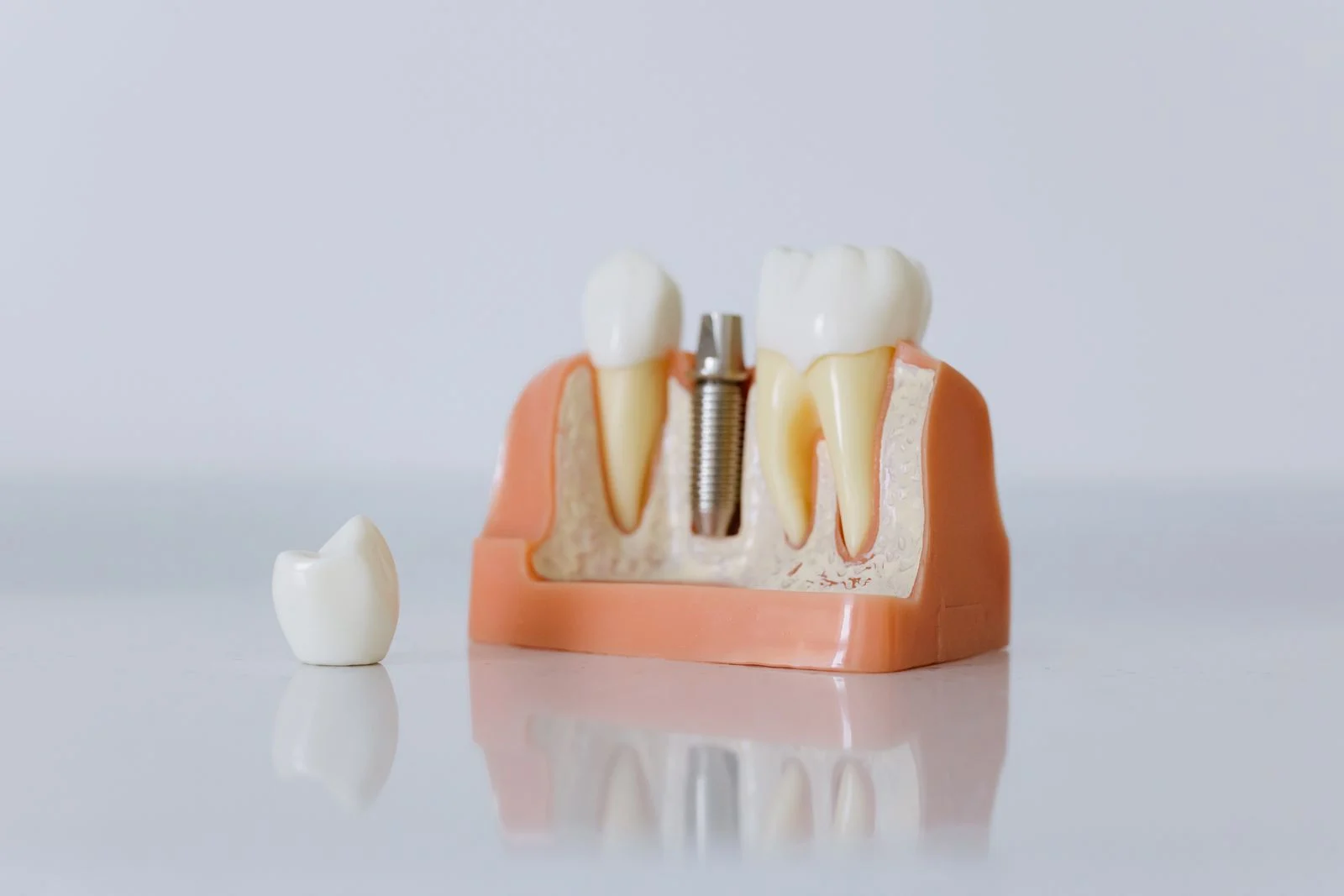
A dental implant restoration has three separate parts. The implant body replaces the root, the abutment forms the visible support post, and the crown restores the shape and function of the tooth. Each part is made at a different stage, and each one can be replaced without removing the others. That modular design is one of the reasons implants last as long as they do, and it is the simplest way to picture what is a dental implant abutment doing in the middle of the system.
Don't Delay Your Treatment
Let's create your personalised treatment plan right away with a complimentary consultation with our specialist dentists.
Table of Contents
What is a dental implant abutment made to do?
The abutment has three jobs, and all of them affect how the finished tooth looks and feels. It carries the load of biting from the crown into the implant body, it shapes the gum tissue around the restoration, and it holds the crown at the correct height and angle. When patients ask what is a dental implant abutment, the honest answer is that it is the part that decides how natural the final result looks. A poorly shaped abutment shows through as a dark line or an uneven gum margin.
- Connects the crown to the implant with a small internal screw
- Supports and shapes the gum so it follows a natural curve
- Sets the angle of the crown when the implant is slightly tilted
- Allows the crown to be removed and replaced without touching the implant
Because the abutment does all of this, it is chosen after the implant has healed and the gum shape is known. Rushing this step usually shows in the final aesthetics. Patients rarely ask what is a dental implant abutment until this stage, yet it is the point where the plan is easiest to improve. Our team plans the abutment together with the crown design rather than as an afterthought, because what is a dental implant abutment shaped like decides how the gum drapes around the final tooth.
How do the three parts fit together?
The implant body is placed into the jawbone and left to fuse with it, a process called osseointegration. Once fusion is complete, the top of the implant is uncovered and the abutment is screwed into it. The crown is then either cemented onto the abutment or held by a second screw that passes through it. Screw retained crowns are easier to remove later, while cemented crowns can look slightly cleaner at the gum line. Either way, what is a dental implant abutment holding is a crown that can be serviced without surgery.
This layered structure is what makes repairs straightforward. If a crown chips after several years, it can be replaced while the implant and the abutment stay in place. You can read how the parts differ across systems on our dental implants pages, and the same principles apply to single teeth and full arches.
What materials are abutments made from?
Titanium and zirconia cover almost every case, and each has a clear indication. The choice depends on how visible the tooth is, how thick the gum is and how much chewing force the area receives. Understanding what is a dental implant abutment made of also explains why some restorations look grey at the gum line while others do not.
Don't Delay Your Treatment
Let's create your personalised treatment plan right away with a complimentary consultation with our specialist dentists.
When is titanium the right choice?
Titanium is strong, well tolerated and has decades of clinical data behind it. It is the default for back teeth, where forces are highest and the abutment is not visible. In patients with thick gum tissue it can also be used at the front without any visible shadow. The material bonds well with the surrounding soft tissue, which helps long term stability. For most posterior cases, what is a dental implant abutment made of comes down to titanium for that reason.
When is zirconia preferred?
Zirconia is white, so it does not show through thin gum tissue at the front of the mouth. It is the usual choice for upper incisors and canines, where appearance matters most. Zirconia is slightly less forgiving under heavy load, so it is not the first option for molars in patients who grind. The decision is always made with the gum thickness measured, not guessed. That measurement is the practical answer to what is a dental implant abutment best suited to a front tooth.
What is the difference between stock and custom abutments?
Stock abutments are prefabricated in standard shapes and sizes, which makes them quicker and less expensive. Custom abutments are milled for the individual patient from a digital scan, so they follow the exact contour of the gum. In the aesthetic zone the custom option almost always produces a better emergence profile. For a hidden back tooth a stock abutment can be perfectly adequate.
Anyone comparing treatment plans should ask which type is included. The difference is invisible in a price list but very visible in a smile. When patients ask what is a dental implant abutment worth paying more for, this is the point where the extra cost actually shows in the result.
When is the abutment placed?
In a conventional protocol the abutment is fitted after the implant has integrated, usually three to six months after surgery. In immediate loading cases a temporary abutment and crown can be placed on the same day as the implant, provided the implant is stable enough. Our same day implants protocol uses that approach only when the initial stability measurement allows it. The permanent abutment is still fitted later, once healing is complete.
Don't Delay Your Treatment
Let's create your personalised treatment plan right away with a complimentary consultation with our specialist dentists.
Full arch cases follow their own sequence. In all on 4 treatment the abutments are usually angled to correct the tilt of the posterior implants. This lets the bridge sit in the right position without additional surgery. The number of appointments changes, but the sequence of implant, abutment and prosthesis stays the same. Understanding what is a dental implant abutment used for in a full arch also explains why angled versions exist.
Does fitting an abutment hurt?
The appointment itself is short and usually needs only local anaesthetic. If the implant was covered by gum tissue, a small opening is made to reach it, and that area can feel tender for a few days. Most patients describe the sensation as pressure rather than pain. Over the counter pain relief is enough for the vast majority.
The gum around a new abutment takes a week or two to settle into its final shape. Slight bleeding when brushing during that period is normal. Recovery in general is covered in our guide on how long dental implants last, where the same maintenance principles apply.
Can an abutment come loose or need replacing?
It can, and the most common cause is a screw that has loosened under repeated load. A loose abutment feels like a slightly mobile crown and should be checked quickly, because chewing on it can damage the internal threads. Retightening is a simple procedure when it is done early, and it is far cheaper than the repair that follows a neglected loose connection. Ignoring the movement is what turns a small issue into a complicated one.
Replacement is also possible if the gum shape changes over the years or the aesthetics need improving. Because the abutment unscrews, the implant itself is not disturbed. Knowing what is a dental implant abutment does for the restoration explains why this part is designed to be serviceable.
Don't Delay Your Treatment
Let's create your personalised treatment plan right away with a complimentary consultation with our specialist dentists.
How should you clean around an abutment?
Plaque collects at the junction between abutment and gum just as it does around a natural tooth. Soft brushing twice a day, interdental brushes and regular professional cleaning keep that junction healthy. Inflammation there is the main cause of bone loss around implants, so the habit matters more than any special product. Patients who keep those appointments rarely have problems. In practice, what is a dental implant abutment surrounded by matters as much as the component itself.
Smoking and uncontrolled diabetes both slow soft tissue healing and increase the risk of inflammation. If either applies to you, tell your dentist so the maintenance interval can be shortened. With a stable gum margin and a well fitted connection, an implant restoration can serve for decades.
What is a dental implant abutment?
It is the connector between the implant in the bone and the visible crown. It supports the crown, shapes the gum and holds the restoration at the right angle.
Is the abutment the same as the implant?
No. The implant replaces the root and stays in the bone, while the abutment is a separate piece screwed into it after healing.
Titanium or zirconia abutment, which is better?
Does the abutment need to be replaced over time?
Not routinely. It can be retightened if the screw loosens or replaced if the gum contour changes, without removing the implant.
How long after implant surgery is the abutment fitted?
Usually three to six months, once the implant has fused with the bone. Immediate loading cases use a temporary abutment on the day of surgery.