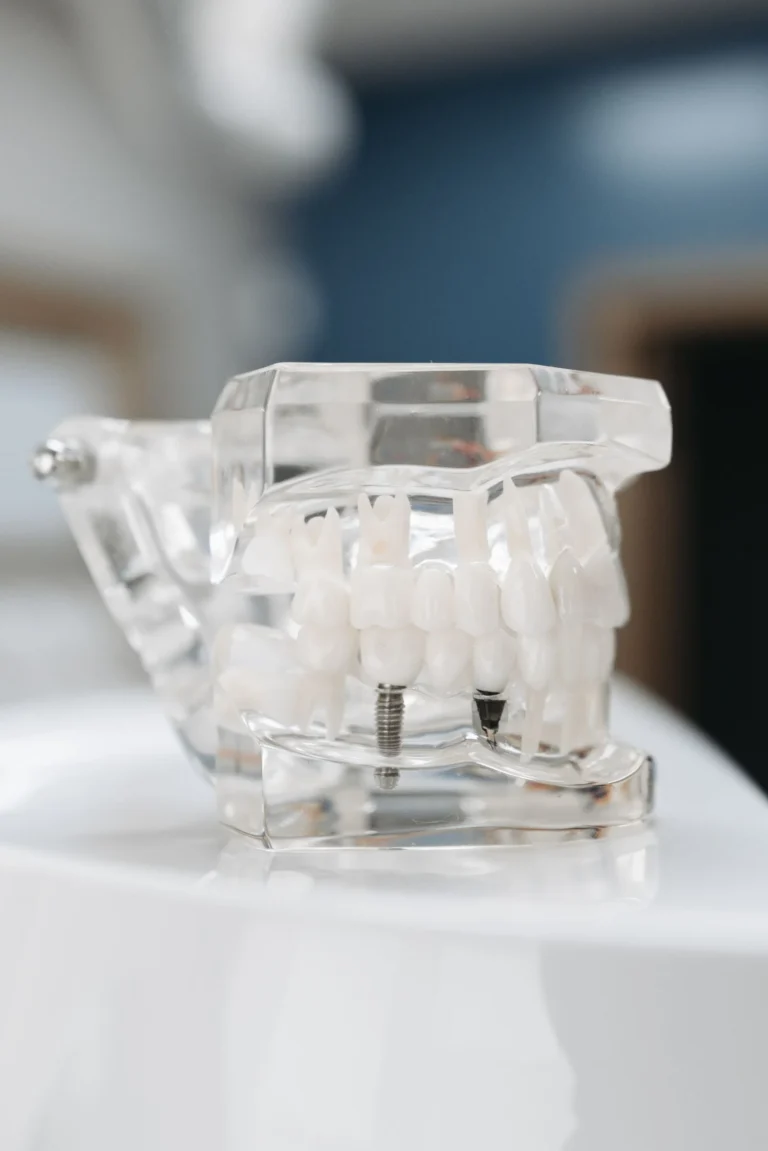
Most of your teeth are gone, the dentures slide around when you try to eat, and the price your UK dentist quoted for a replacement set has sent you looking overseas. Here’s where full mouth dental implants come in: a fixed answer that restores a whole arch (or both) by anchoring a handful of titanium posts straight into the jawbone. Forget the removable stuff. These stay where they belong, they look like real teeth, and biting into an apple stops being something you have to think about.
Here’s what treatment with full mouth dental implants actually involves, who it suits, and what to expect from start to finish.
Don't Delay Your Treatment
Let's create your personalised treatment plan right away with a complimentary consultation with our specialist dentists.
Table of Contents
What does the term actually mean?
When people say “full mouth dental implants,” they’re really talking about any treatment that rebuilds a full upper arch, a lower arch, or both, with implants doing the heavy lifting underneath. Rather than sinking one implant for every missing tooth (which would land you at 28 implants), specialists place 4, 6, or 8 posts in carefully chosen spots and use them to carry a fixed bridge of 10 to 14 teeth. What you walk out with is a permanent set of teeth bolted onto titanium roots, not a plate that just sits on your gums. Brand new to implantology? This primer on what dental implants are is a solid place to start.
Who is a suitable candidate?
Honestly, if you’ve lost a good number of teeth as an adult, you’re probably a candidate, but the real answer comes down to how much jawbone you still have, the state of your gums, and what your medical background looks like. Extra planning kicks in for heavy smokers, diabetics whose sugar isn’t under control, and anyone dealing with serious bone loss. Our detailed write-ups on implants for diabetics and implants for smokers walk through exactly what these situations look like. Not enough bone height to work with? Then a bone graft or sinus lift often gets folded into the treatment plan.
How does it differ from All-on-4 and All-on-6?
Think of All-on-4 and All-on-6 as two specific recipes within the broader full mouth dental implant family. All-on-4 places four implants per arch to hold the bridge, and the back two are tilted so the existing bone can actually be put to work. Six implants go in with All-on-6, which distributes chewing forces more evenly across the arch, and many clinicians lean toward it for the upper jaw. Curious how they stack up? This write-up on All-on-4 vs All-on-6 lays it out clearly. When the upper jaw has lost significant bone, zygomatic implants reach into the cheekbone for anchorage and often sidestep the need for grafting entirely.
What does the procedure involve?
Everything kicks off with a 3D CT scan and digital planning on screen. Teeth that can’t be saved come out, the implants go in under local anaesthetic (sedation’s on the table if you want it), and you usually walk out the same day with a temporary fixed bridge already in place. That’s the same-day implant protocol the ads keep talking about. Give it 3 to 6 months and the implants knit into the bone, a process the dentists call osseointegration. After that, on goes the permanent bridge in zirconia or porcelain.

How long does the whole treatment take?
Most full mouth implant patients end up making two separate trips to Istanbul. Plan on 5 to 7 days for the first visit, which covers the surgery itself plus fitting the temporary bridge. Then, some 3 to 6 months down the line, you’ll come back for another 5 to 7 days to get the final restoration placed. For a day-by-day look at what this timeline actually looks like, check out our piece on how long to stay in Turkey.
Don't Delay Your Treatment
Let's create your personalised treatment plan right away with a complimentary consultation with our specialist dentists.
How does the cost compare with the UK?
In the UK, you’re looking at roughly £2,000 to £2,500 for a single implant, which pushes a full-arch case on 4 to 6 implants with a fixed bridge into the £15,000 to £25,000 bracket at private clinics. Turkish clinics come in well below that, and it’s not because standards drop; it comes down to cheaper staffing, lab work and premises. For the actual breakdown of costs, the article on why implants are cheaper in Turkey walks through the economics. The final price hinges on how many implants you need, which brand you go with, and whether any grafting is on the cards. Every mouth is different, so you’ll need an examination before anyone can quote you a firm figure. Not sure this treatment is right for you? A proper clinical assessment matters, and the full mouth dental implants page goes deeper into the clinical side.
Which implant brands are used?
Good clinics tend to stick with names you’ll actually recognise: Straumann from Switzerland, Nobel Biocare, or the Korean brand Osstem. Straumann alone has over 40 years of clinical data on record, with studies putting 10-year survival rates north of 95%. So when you get a quote, just ask which system it covers. Why does it matter? Because the brand shapes the price today and, further down the line, how easily a UK dentist can get hold of spare parts if you ever need them.
What about aftercare when you’re back home?
Honestly, this is where a lot of dental tourism trips come unstuck. Sort out a UK dentist or hygienist before you even book the flight, someone happy to see you every six months for a check-up and a proper clean around the implants. The big long-term worry is peri-implantitis, which is basically gum inflammation around the implant, and you can keep it under control as long as it’s spotted early. For the first few weeks stick to soft foods, don’t smoke while things are healing, and follow whatever post-op food guidance your surgeon hands you.
Full mouth dental implants are a serious commitment of time and money, but for the right candidate they restore function that removable dentures cannot match. At GençDental we treat UK patients in Istanbul, so send your X-ray or recent photos for a free, no-obligation treatment plan and quote.
How many implants are needed for a full mouth restoration?
Most cases use 4 to 6 implants per arch to support a fixed bridge of 10 to 14 teeth. Some plans use 8 for extra stability on the upper jaw, and the number depends on bone quality and bite forces.
Are full mouth dental implants painful?
The surgery is done under local anaesthetic with optional sedation, so you feel pressure but not pain. Most patients manage the following days with standard painkillers and describe the discomfort as milder than an extraction.
How long do full mouth implants last?
With good hygiene and regular check-ups, the titanium implants themselves can last 20 years or more. The bridge on top may need replacement or refurbishment after 10 to 15 years due to normal wear.
Can I have all my teeth removed and implants placed in one day?
Yes, this is the same-day or immediate loading protocol. Extractions, implant placement and a temporary fixed bridge are completed in one visit. The permanent bridge is fitted after 3 to 6 months of healing.
Do I need a bone graft for full mouth implants?
Not always. Techniques like All-on-4 angle the implants to use existing bone, and zygomatic implants use the cheekbone for anchorage. A CT scan tells the surgeon whether grafting is needed for your specific case.